Day 3 — Vale de Figueira to Golegã
22 km walked + 8 km wandering around Golegã
One pastry, one wine, one bug (unintentional), and one bowl of snails (intentional)
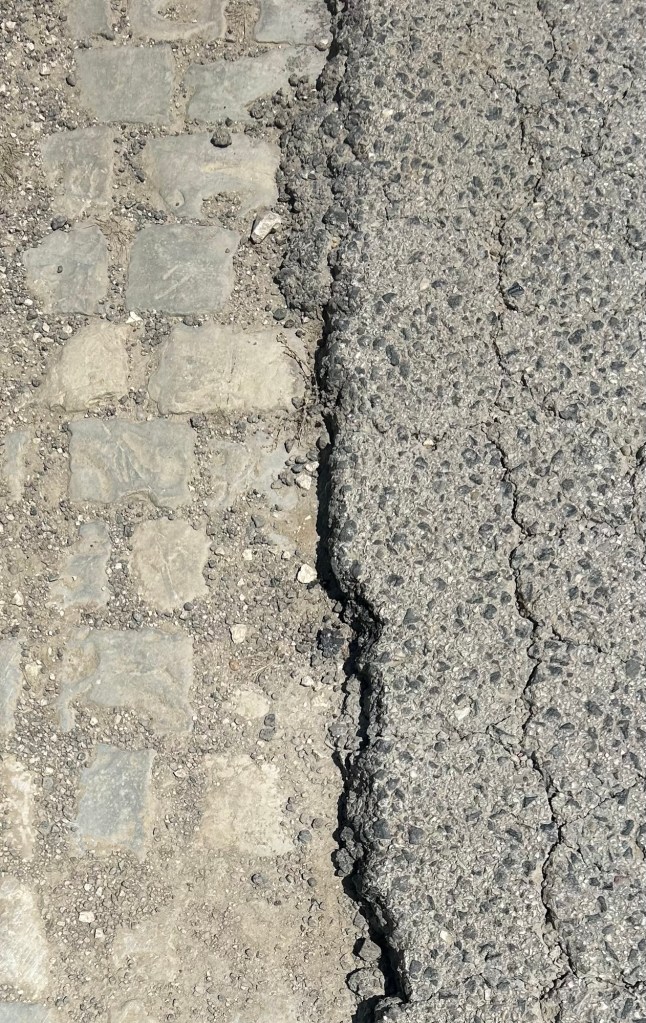
Similar to the roads of Portugal, my travel plans have taken a new shape. I arrived focused on reaching my final destination; now I pay attention to the flow. And when I notice disruption, I recognize it’s time for adaptation.
The previous night, I stayed in a small house with two other pilgrims.
One was a woman from California who has completed 70 marathons, runs 40 miles per week, and plans to walk 30–40 km each day. She ignores the “1 lb per 10 lbs of body weight” backpack rule — her pack weighed 23 lbs and even included dehydrated food. She is an expert, and something I aspire to.
The other was a Danish man, an avid outdoorsman who walked the French Camino 10 years earlier and lives by the rule of slow and steady.
When we woke in the morning and shared our plans for the day, I had a decision to make — albeit not a difficult one.
One option was to leave the Camino and walk alongside a busy highway, hoping to save a few kilometres. The other was to stay on the Camino, backtrack slightly, and continue through the countryside.
It felt symbolic — a choice between chaos and distraction, or settling into the quiet.
The countryside rewarded that choice immediately.
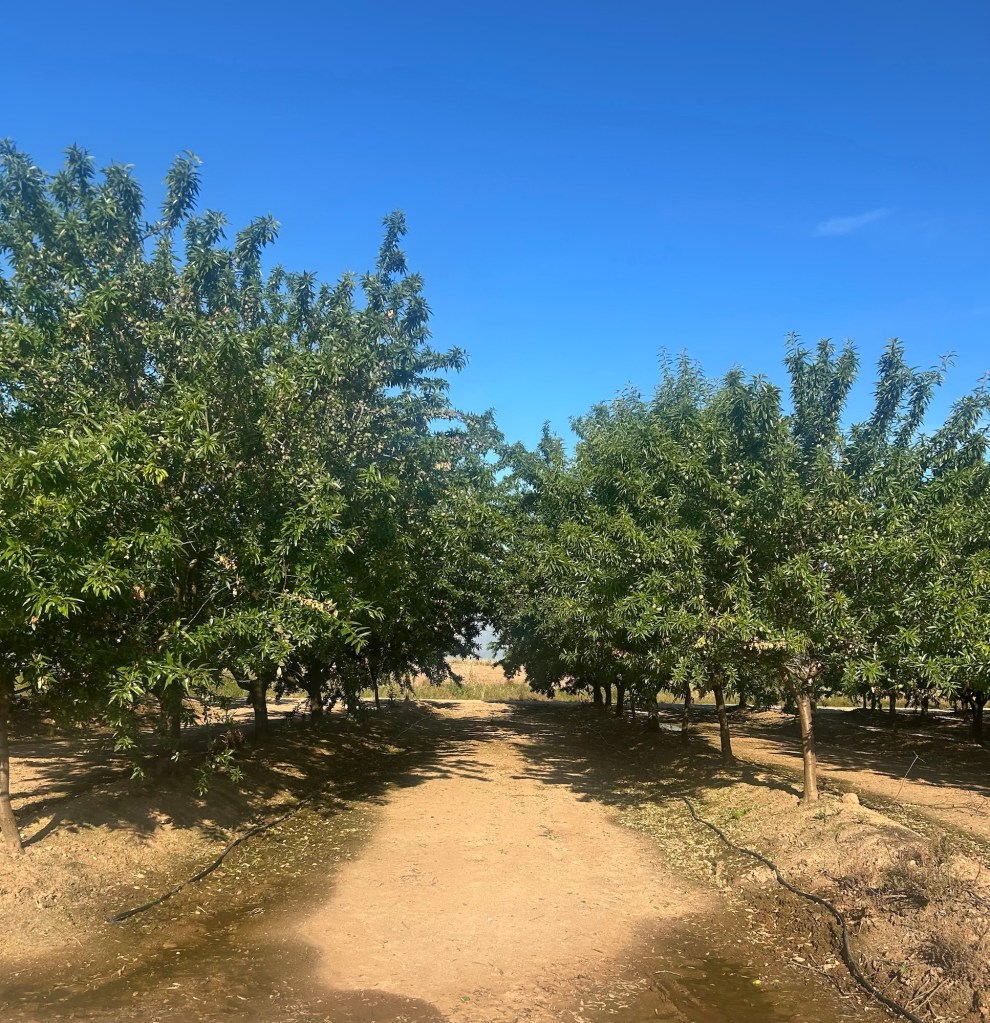
The Camino weaved through agricultural communities, passing fields of corn, cabbage, tomatoes, kale, beets, and kohlrabi. We walked by rows of olive, almond, walnut, and mulberry trees. Ditches lined with poppies, hollyhocks, vines, fennel, blackberry bushes, fig trees, and cacti. Irrigation systems powered by solar panels. Tractors in motion. Labourers sitting in the shade, taking refuge from the sun.
The farther we walked from the noise of the highway, the more aware I became of the simple rhythm of the land — the wind moving through the crops, birdsong carrying across the fields, the scent of herbs warming in the sun. Nature has a way of slowing the mind and quieting unnecessary urgency.
After 13 km, it was time to stop for lunch. There we connected with another pilgrim — a young woman from France celebrating her 36th birthday. Wise beyond her years, she was a deep thinker, compassionate, and well travelled.
The three of us walked together from Azinhaga to Golegã.
When we arrived at Inn Golegã, we found several other exhausted pilgrims. We all shared the same sentiment: the Camino from Lisbon is quiet, and our feet are keeping score.
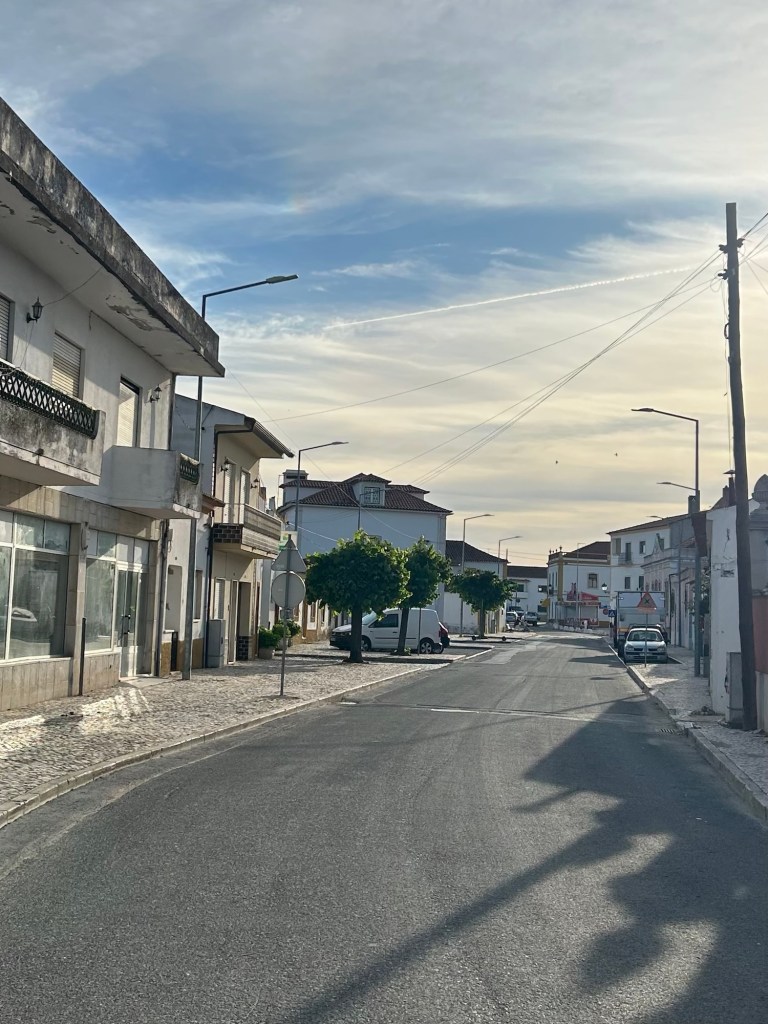
We wandered around Golegã in search of food, and I quickly grew fond of the close-knit community. Golegã is known as the “Capital of the Horse” because of its deep connection to the Lusitano horse and its famous National Horse Fair. Its history is rooted in farming, horsemanship, and traditional Portuguese culture.
After many kilometres of walking — and circling the same streets repeatedly searching for an open restaurant — we finally found a place to eat.
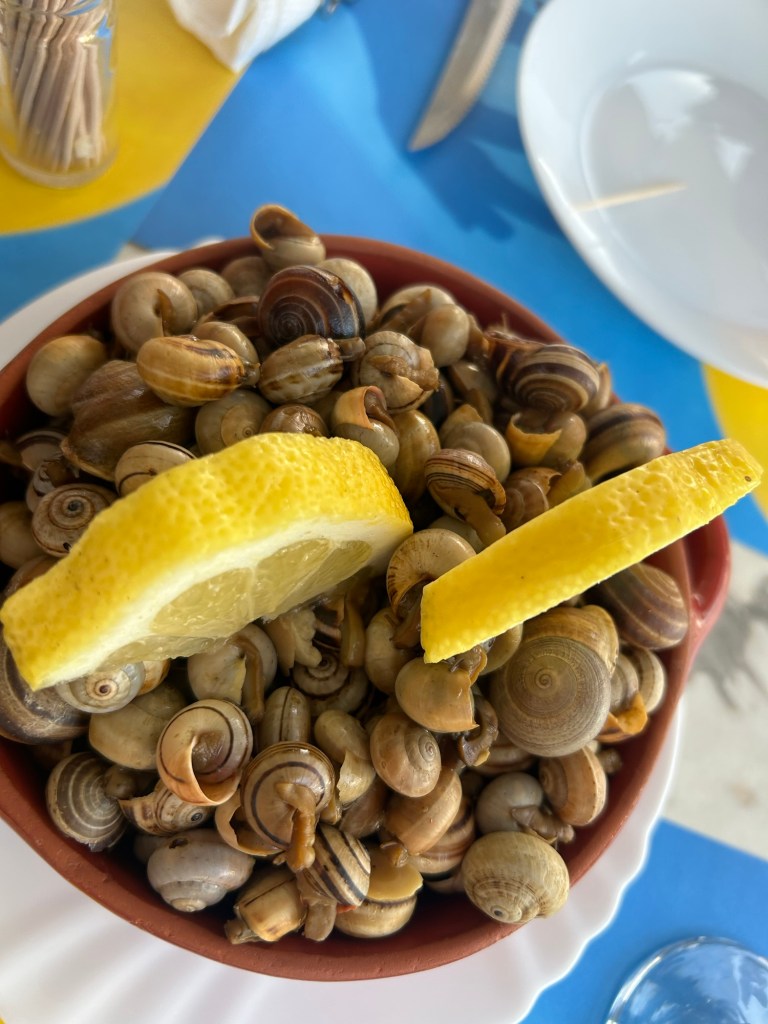
I had my first culinary experience eating snails. They were boiled in garlic and oil and were surprisingly delicious. Had I not needed to dig them from their shells, I would have thought I was eating mushrooms.
The night came early, and the sleep was deep.
Day 4 — Golegã to Tomar
20 km walk to Asseiceira + 10 km cab ride to Tomar
One beer and an incredible chocolate mousse.
Our walk continued through beautiful farmland and past historic sites.
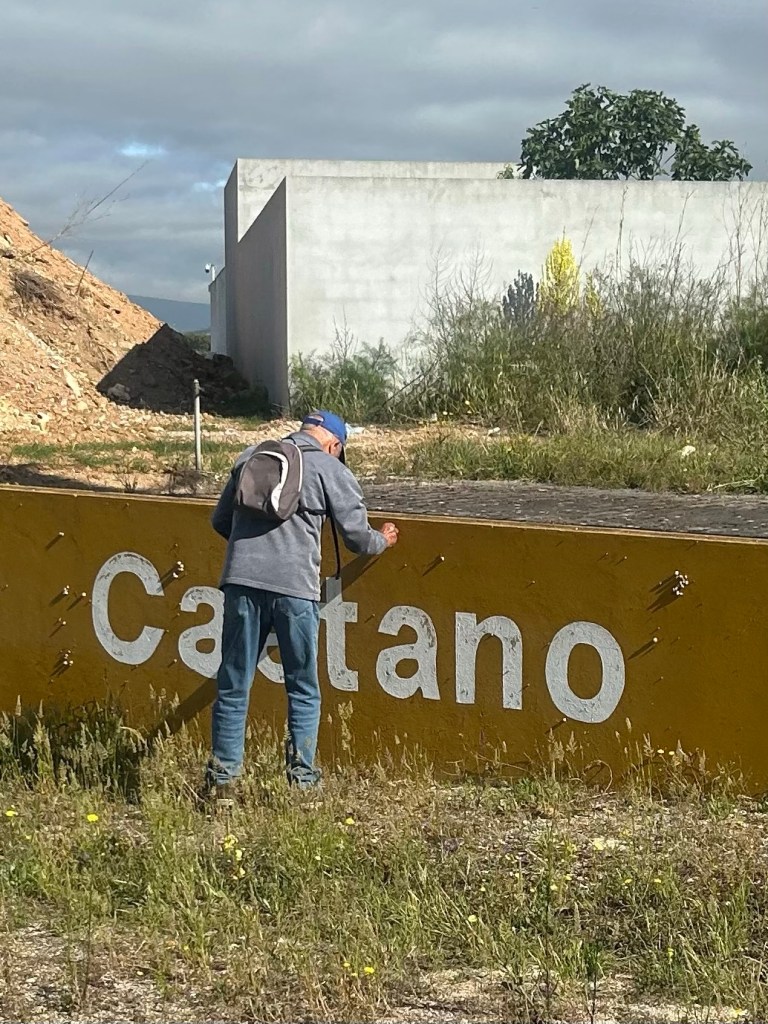
As we entered São Caetano, I noticed a local “farming” for snails along a concrete wall. He collected a bag full — about the size of my meal the night before.
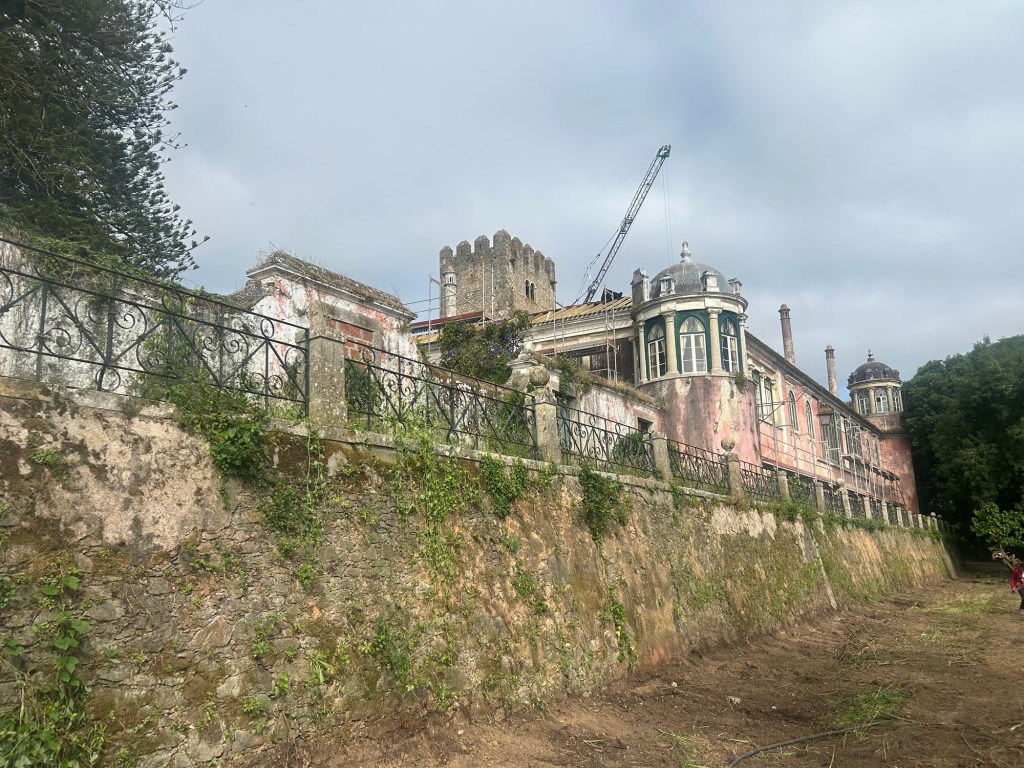
Following an archway of trees shading the cobblestone road, we came upon Quinta da Cardiga. Built in the 1200s and lovingly being restored, it sits majestically on a cliff overlooking the Tagus River. I was in complete awe of its size and condition after eight centuries.
After 9 km, we reached a small town where Google Maps promised two restaurants. We were hungry and eager to sit down for a meal. Both were closed.
A Portuguese man noticed the hunger in our eyes and directed us to a grocery store. It was the tiniest store I had ever seen, yet somehow it had everything we needed to replenish our energy.
We packed a bag with canned tuna, sardines, calamari, small baguettes, goat cheese, tomatoes, bananas, clementines, and walnuts, then found a place to sit and enjoy a picnic.
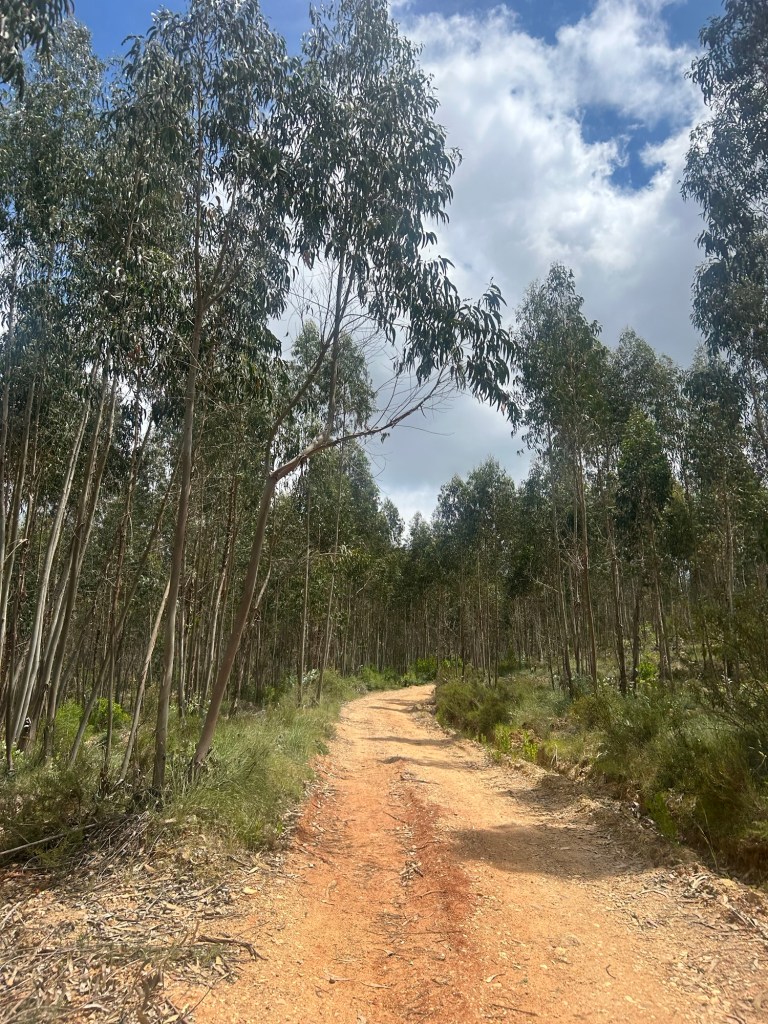
Before leaving for Portugal, I had read about the eucalyptus forest. It was just as beautiful as I had imagined.
Rows upon rows of fragrant trees lined the rolling gravel roads. Light filtered through the treetops and found its way to warm the earth. Birds sang as we cautiously stepped across loose rocks. Our movements became mindful, almost meditative.
There is something grounding about walking through nature at the pace of your own body. No screens. No rushing. Just the crunch of gravel beneath your boots, the smell of eucalyptus in the air, and enough silence to hear your own thoughts clearly again.
The shifts in elevation made us very aware of our ankles and knees — high fives for all those morning squats done in preparation.
One of my travel companions developed terrible foot pain and discovered a blister on her baby toe the size of the snails we had eaten the night before. We knew the next hostel, only 2 km ahead, was already full. Our destination was Tomar, another 12 km up the road.
It would have been a difficult push.
Patience matters. There is little value in stressing your feet and knees solely for the sake of destination. The value lies in listening to your body and doing what feels right in the moment.
So once again, we adapted. We hailed a cab.
Tomar welcomed us warmly.
Our hostel was tucked inside a historic four-story building filled with antique furniture and the comforting scent of old wood and time. Stepping inside felt like stepping into another era.
Just outside the front door stood the cathedral, surrounded by narrow streets lined with cafés, shops, and the quiet evening energy of the town square.
We ended the day celebrating my friend’s birthday with dinner along the Nabão River. The lights reflected off the water as locals and travellers lingered late into the evening, enjoying food, conversation, and the softness that comes after a long day of walking.
That night, I fell asleep to the sound of what seemed to be a local choir practicing somewhere nearby. Their voices drifted through my open window and echoed softly through the streets of Tomar — the perfect soundtrack to end another day on the Camino.
I’m glad you’re here.
Until next time….there’s more to come.
XO


Leave a comment